
Why ERP technologies matter
Why Technology Counts
Older ERP systems typically lack the ability to adapt to new and emerging trends and consumer demands, quickly, cost effectively, and if at all. With integrations, automations and AI heading the list of what companies want from their core ERP business system, the technologies used by your ERP vendor are critically important. ERP systems remain the "backbone" of most business systems. Market leading ERP software supports simplified integration with other Cloud software systems so companies can seamlessly operate segment leading applications with their back-office ERP system. Examples of market leaders include Block (Square), Lightspeed, Shopify, Halo CRM, Employment Hero HR & Payroll and a host of expense management, document management and Bi applications.
Technologies shouldn't be confused with deployment albeit a reliance on older technologies often impacts deployment choices.

Custom & 3rd Party extensions
These days, modern ERP systems aren't generally offering P.O.S, Human Capital Management, eCommerce software or Manufacturing Execution Software (MES) as a core capability instead relying on connectivity with market leading Cloud systems. ERP system design will determine how quickly, seamlessly and cost effectively these integrations can be incorporated in to a companies IT eco-system.
Most of the leading global ERP vendors operate independent software vendor (ISV) programs where ISVs develop software extensions exclusively for a specific ERP system. Generally speaking these developments are created on the ERP platform meaning they generally provide a consistent user experience with the core ERP system (Same look and feel, navigation capabilitiees and often plug into various UX capabilities of the core ERP).
In some instances an ERP lacks a particular set of functions or speciality capabilities often tied to an industry requirement and the ERP vendors ISV community is yet to fill the void. In these instances providers of ERP solutions may use 3rd party systems. 3rd party systems can contain many useful functions however their technologies, especially relating to integrations often differ to those used by the ERP vendor, and their look and feel stands out to users as a seperate piece of software to their ERP system.
When choosing 3rd party add ons it's important to consider their technologies as older technologies may hamper your ability to upgrade your core ERP. It may also impact admin overhead and the timely accessing of accurate business data
Sage X3 ERP
Sage X3 ERP is a development platform designed to seamlessly integrate with ISV and 3rd party systems. Examples of 3rd party systems that integrate with Sage X3 ERP include Shopify, Autodocs, Lynq MES. Sage also runs an independent software vendor program (ISV program) where companies write software specifically for Sage ERP X3. Products such as Datalinx WMS and Provenio offer specialized capabilities for wholesalers and companies handling and manufacturing dangerous goods.
Sage empowers companies to write extensions and applications on the Sage X3 platform. Sage makes available, a range of activity codes for developers, so standard vendor upgrades can occur without disruption from custom developments. CitySoft have created a large number of ISV products and has created integrations between Sage X3 ERP and market leading Cloud systems including freight systems, smart machines, EDI systems and many more.

Some of the tools in the Sage X3 kit bag include -
Sage Insight studio enables consultants and users to modify and create new insights. Sage X3 dashboards can be created using a next gen technology for ai generated dashboards (GraphQL APIs) Sage X3 Builder users Typescript and GraphQL to build apps or pages in X3 (Workflow, ease of use…)
Sage foundation contains Ai, integrations, GraphQL APIs, and X3 Builder. They all came together in release 2026. AI uses Sage X3 Builder which provides a new user interface that can natively use Sage x3 data - a low code no code UI AI focused UI
Sage X3 ERP uses a SQL database which opens up opportunities for companies to use their preferred business intelligence (Bi) application such as MS Power Bi, Qlik, Nectari and others.
SAP Business One
SAP Business One boasts of a large independent software vendor cohort (ISVs). SAP also offers SAP Business One clients an extensive catelog of integrations with Cloud applications potentially saving companies significant amounts of money otherwise required to create integrations from scratch. The leading ISV for SAP Business One is undoubtably Boyum who have created a range of extension products, products that add significant functionality to the core SAP Business One ERP system & a number of utility products that either extend upon existing SAP Business One capabilities or add a single or small number of new capabilities. The popular Boyum products include BEAS, B1uP and Boyum Produmex advanced warehouse software. The developers at BatchMaster, rewrote their process manufacturing functionality in their own ERP on the SAP Business One platform to create a unified end to end business system solution for process manufacturing concerns based on SAP Business One.
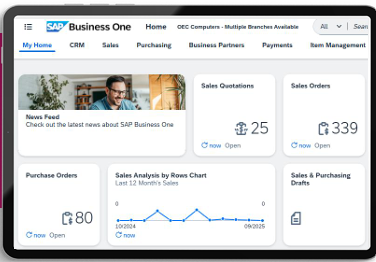
SAP are reaching the end of their current modernization journey with SAP Business One taking their original client server application all tghe way through to being a full web enabled ERP. The Fiori UX for analytics and the SAP Business One Web client UX are first class. The system includes digital enablers - AI and machine learning; SAP Business Technology platform (SAP BTP) Cloud services, Analytics and mobile technologies. SAP Build enables consultants and system users to create enterprise apps and to automate business processes, and design business sites with drag and drop simplicity. The SAP Business One web client supports using SAP Business One using a native web browser. The SAP Business One Web client, analytics deliver users with the ability to gather multiple data sources, create user defined queries and link views for contextual analytics.
Sage 300
One of Sage 300's strengths over the last 30 or so years has been its extensive community of 3rd party ISVs. Like SAP Business One the community has created expansion products and extension products including small utilities that complement the core Sage 300 system. Over time, Sage 300's strength has harmed it somewhat as similar products to Sage 300 have included, as standard, functionality that one must purchase under the Sage modular system. What was a strength now reduces the value proposition of Sage 300. For the 40,000 companies using Sage 300 the ISV community does add great value enabling companies to extend the life and return from their Sage 300 system by adding these ISV extension modules.
The Sage 300 modernization journey like SAP's Business One journey has spanned many years but has now delivered most if not all of the functionality that was available under the older client server editions, under a Web client

Sage Intacct
Intacct, Sage's mid market (SMB & SME) finance system is a vendor cloud SaaS offering sold via Sage authorized partners. One of Intaccts main selling points is its technologies supporting integration with and between other Cloud software systems.
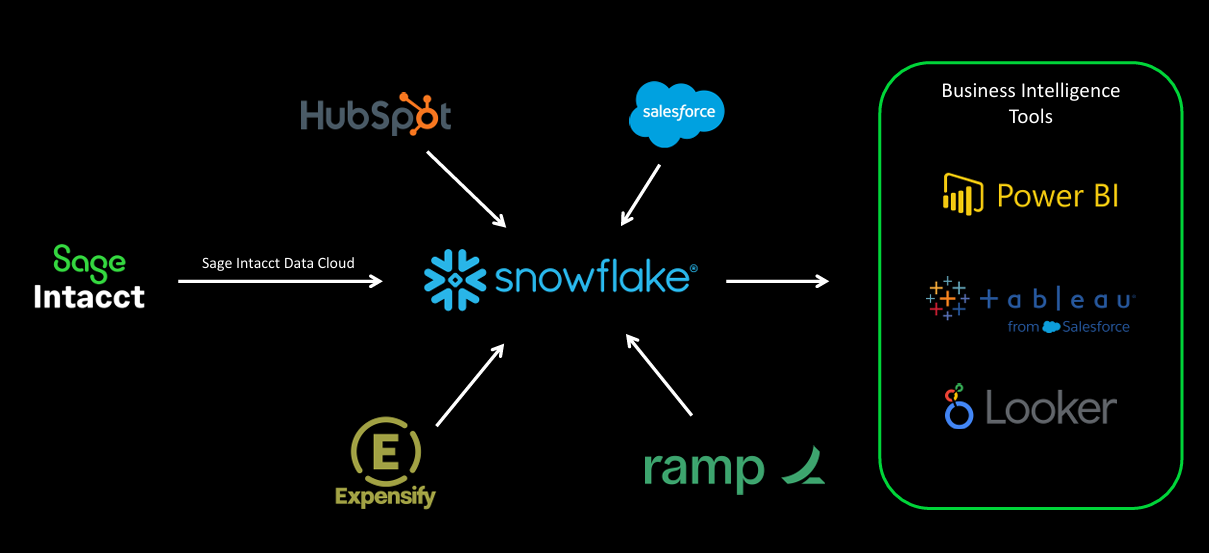
For instance, Sage Intacct Data Cloud offers direct secure access to Intacct data via Snowflake. Sage provides seamless views of Intacct data in turn supporting continuous access for analytics and custom reporting. The scalable architecture supports large data volumes whist retaining enterprise-grade performance.
Further examples of how Sage Intacct technologies help companies excel in a modern digital environment include - Customer payment services (e-payments); Sage Intelligent Time Geofencing; AP Automation & an AI powered Import Agent and a close and finance intelligence agent via Sage Copilot.
Microsoft D365
Microsoft Dynamics 365 Business Central is made available as a software as a service (SaaS). Business Central provides the collaborative capabilities needed to connect your people using a single solution, so everyone across the organization is empowered to adapt faster, work smarter, and perform better.
Like Sage 300 and SAP Business One, Microsoft D365 offers companies using core D365 a number of ISV products that expand existing functionality or add brand new capabilities to D365. Aptean, owners of Lascom Product Lifecycle software (PLM) also provide a suite of extension products for Microsoft ERP systems designed for the food and beverage sectors.
Dynamics 365 apps offer a rich and mature set of features for various industries. But sometimes you might want to extend your processes or use data from other sources. Microsoft supports you connecting your Dynamics 365 apps with other solutions or with each other.